

Immersive Tech
Public Relations for Spatial Computing, Industrial AR, and Location-Based Experience.
The central challenge for immersive technology in Asia Pacific is not engineering quality — it is narrative positioning. To a corporate board, a venture capital committee, or an enterprise procurement team, spatial computing, industrial digital twins, and augmented reality interfaces are consistently misread as speculative concepts rather than deployable infrastructure.
We close that gap. Our team works natively in spatial engineering, physical-digital architecture, and enterprise XR deployment. We do not need a technical briefing to understand your product. We need to understand your buyer — and then we build the media and stakeholder programme that puts your platform in front of them as a business-critical decision, not a technology experiment.
Our work spans enterprise industrial AR, location-based mixed reality, frontier computing research, and immersive educational environments — from SIGGRAPH Asia across five countries to the AStation Enterverse launch at ITB Asia 2025 to TeamViewer's Connected Worker programme across Southeast Asia
Case Studies in Immersive Tech PR
-
![TeamViewer CEO on CNBC Asia_by Pinpoint PR]()
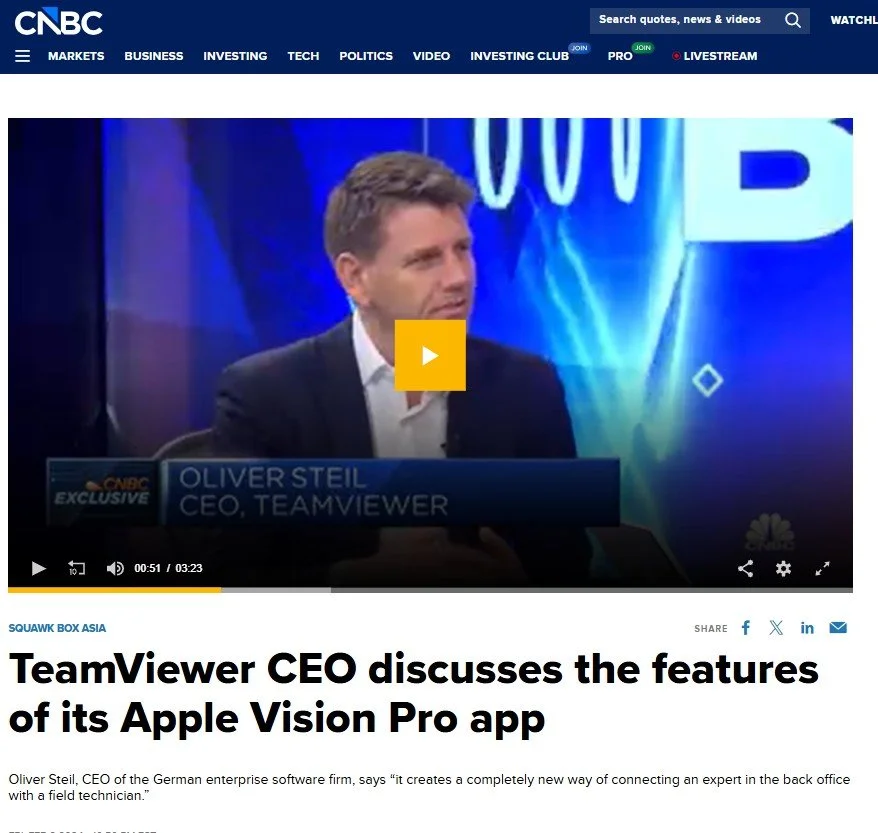
TeamViewer — Enterprise Industrial AR
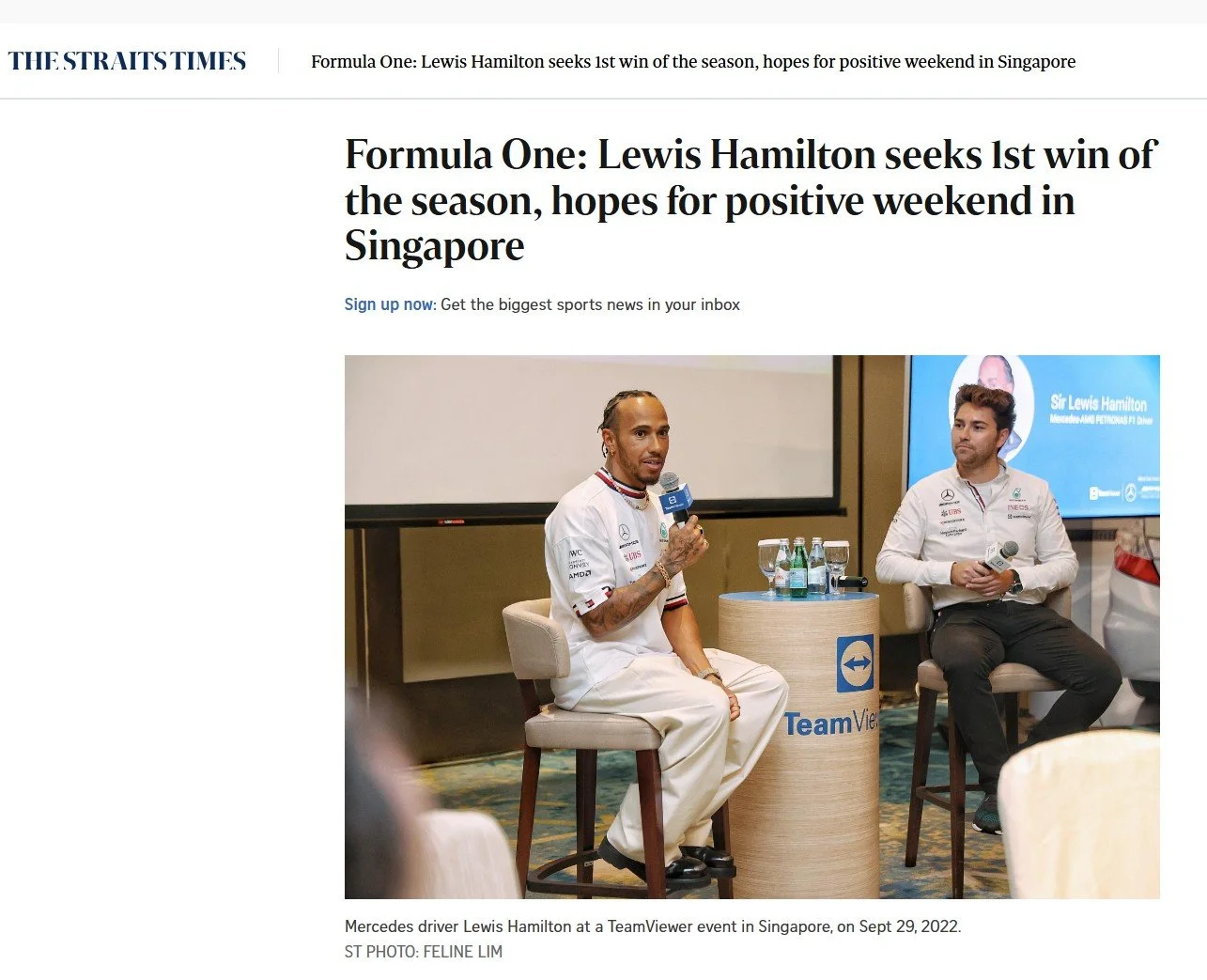
Pinpoint PR has managed TeamViewer's Singapore and Southeast Asia press office since 2022, building a sustained regional communications programme for one of the world's leading remote connectivity and AR platforms.
The programme operates across two distinct tracks. The first targets enterprise and industrial trade media — placing TeamViewer's Frontline AR platform as essential operational infrastructure for manufacturing, logistics, and pharma sectors across Singapore, Malaysia, Indonesia, the Philippines, and Vietnam. The second leverages TeamViewer's partnership with the Mercedes-AMG PETRONAS Formula 1 Team to open mainstream business and consumer media doors that pure enterprise narratives rarely reach.
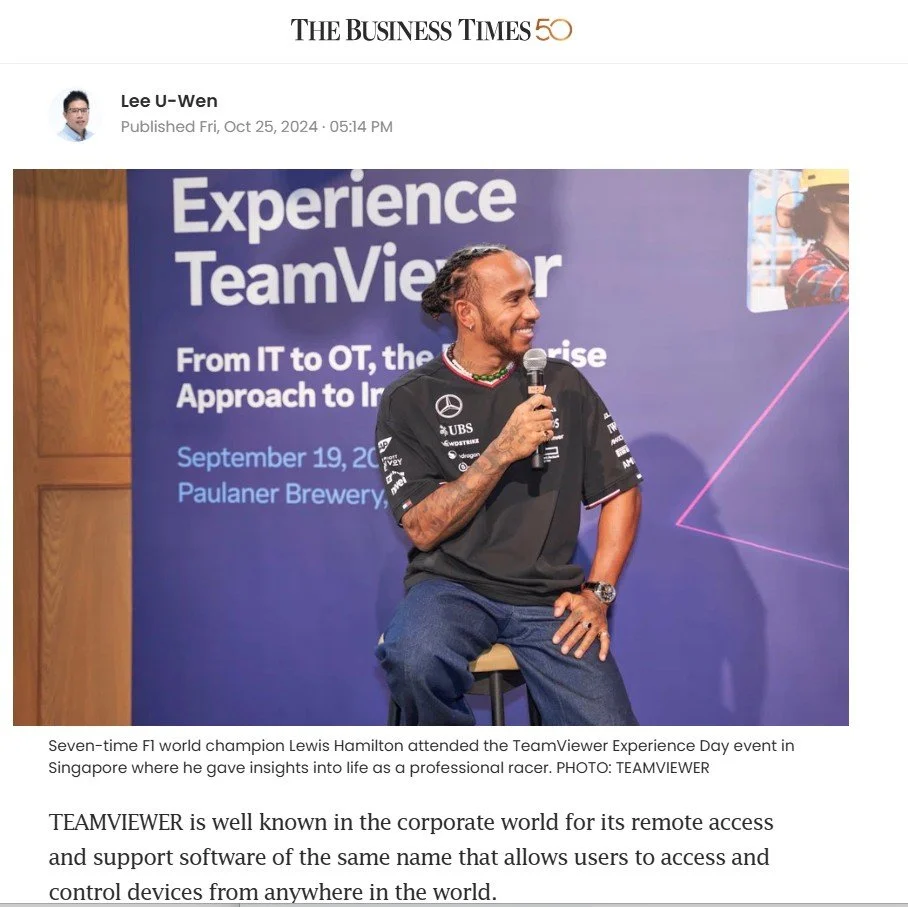
The centrepiece of the F1 communications programme was a Journalist Visit Programme coordinated around the 2024 Singapore Grand Prix. Pinpoint PR flew in journalists from five markets — ABS-CBN and Philstar from the Philippines, BERNAMA and Asia Online Publishing Group from Malaysia, and The Saigon Times from Vietnam — managing flights, hotels, grandstand access, briefing schedules, and interview facilitation across two days. The Business Times covered Lewis Hamilton's appearance in both print and online editions. Total reach from the Experience Day campaign spanned outlets with significant UVM metrics, including ABS-CBN (36.7M), Liputan6 (23.6M), BERNAMA (1.9M), and Philstar (5M).
The Mercedes-AMG PETRONAS simulator AR story — demonstrating how TeamViewer technology compressed testing and development cycles for the F1 team — generated cross-market pickup without a live event, landing in BERNAMA, Manila Standard, Metrology, and NewsBytes PH among others.
Across 2025, the programme delivered substantial coverage across the region, spanning bylines, press releases, predictions pieces, and executive interviews, with placements in Computer Weekly, ITWire, FutureIOT, HRM Asia, Mashable Indonesia, and Cybersecurity Asia.
Specialism: Enterprise Spatial Computing, Industrial AR, Connected Worker Infrastructure
-
![Pinpoint PR_AStation Enterverse Launch at ITB Asia 2025_Media demonstration.JPG]()
AStation — Location-Based Mixed Reality
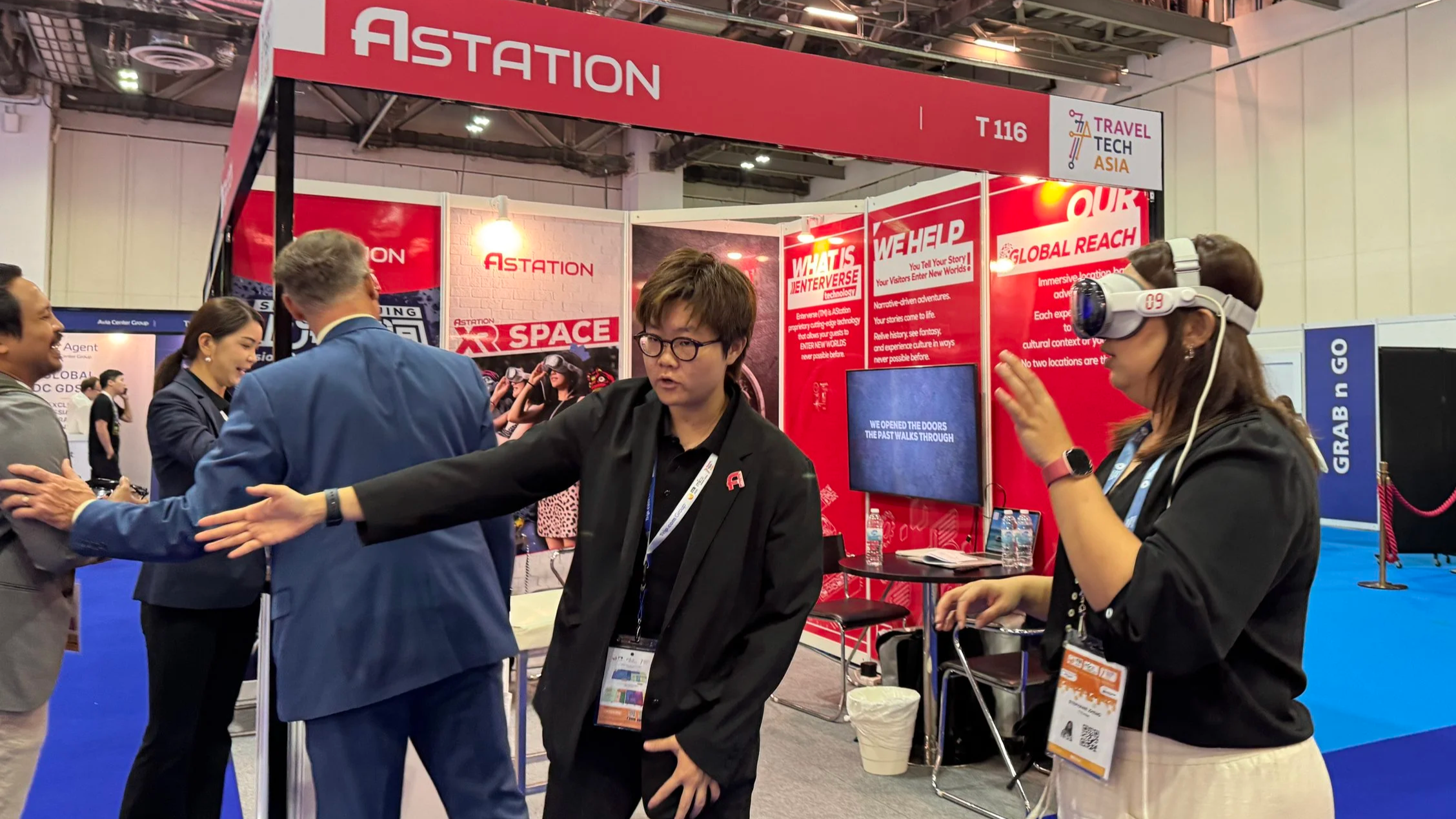
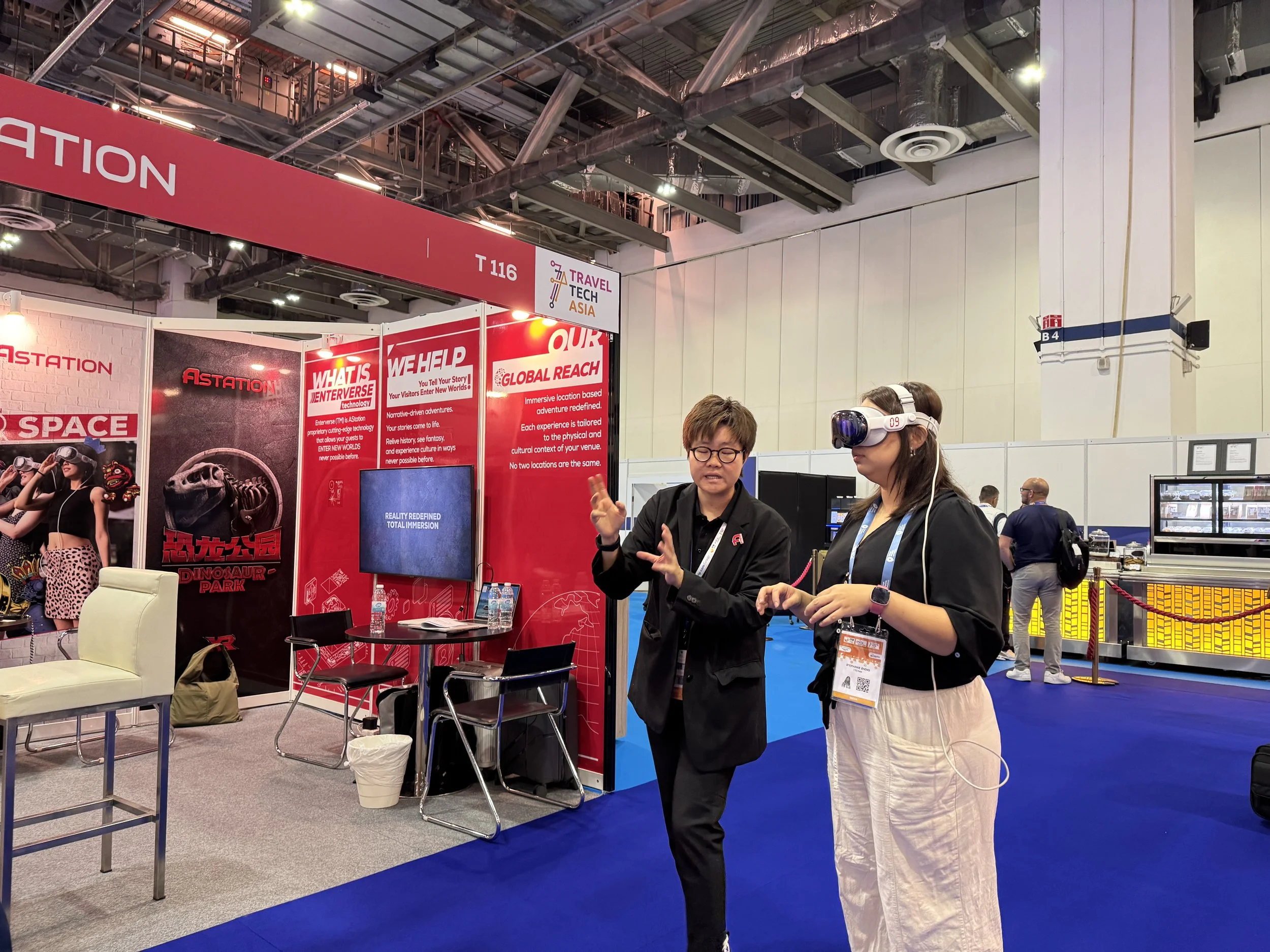
Market entry communications for a next-generation location-based mixed reality platform targeting the Asia-Pacific travel, tourism, and commercial entertainment sectors.
AStation's Enterverse platform offers commercial venue operators a high-margin, zero-footprint alternative to traditional physical attraction development — interactive historical biomes and virtual environments deployable within weeks, with no construction overhead or zoning constraints.
Pinpoint PR had the messaging target commercial property developers, hospitality operators, and travel technology buyers, leading with throughput and margin metrics rather than immersive experience language.
Pinpoint PR manages AStation's ongoing LinkedIn content strategy.
We are achieving visibility across regional travel technology, commercial attractions, and hospitality trade titles, establishing Enterverse as the reference platform for location-based interactive entertainment in Southeast Asia.
Specialisms: Location-Based Mixed Reality & Spatial Entertainment; AR, MR, VR, XR
-
![SIGGRAPH Asia Press Conference by Pinpoint PR.jpg]()
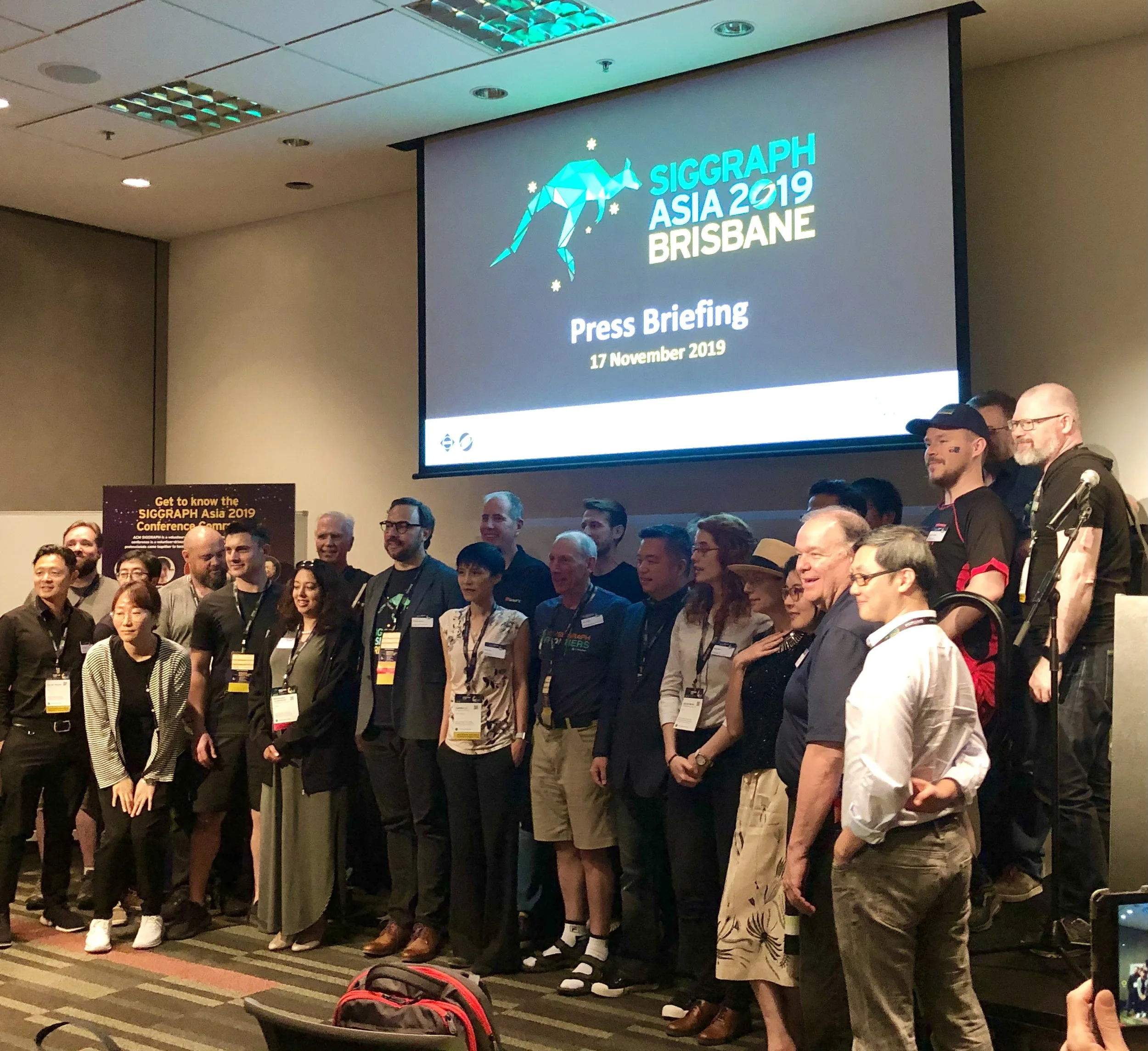
SIGGRAPH Asia — Frontier Computing & Interactive Techniques
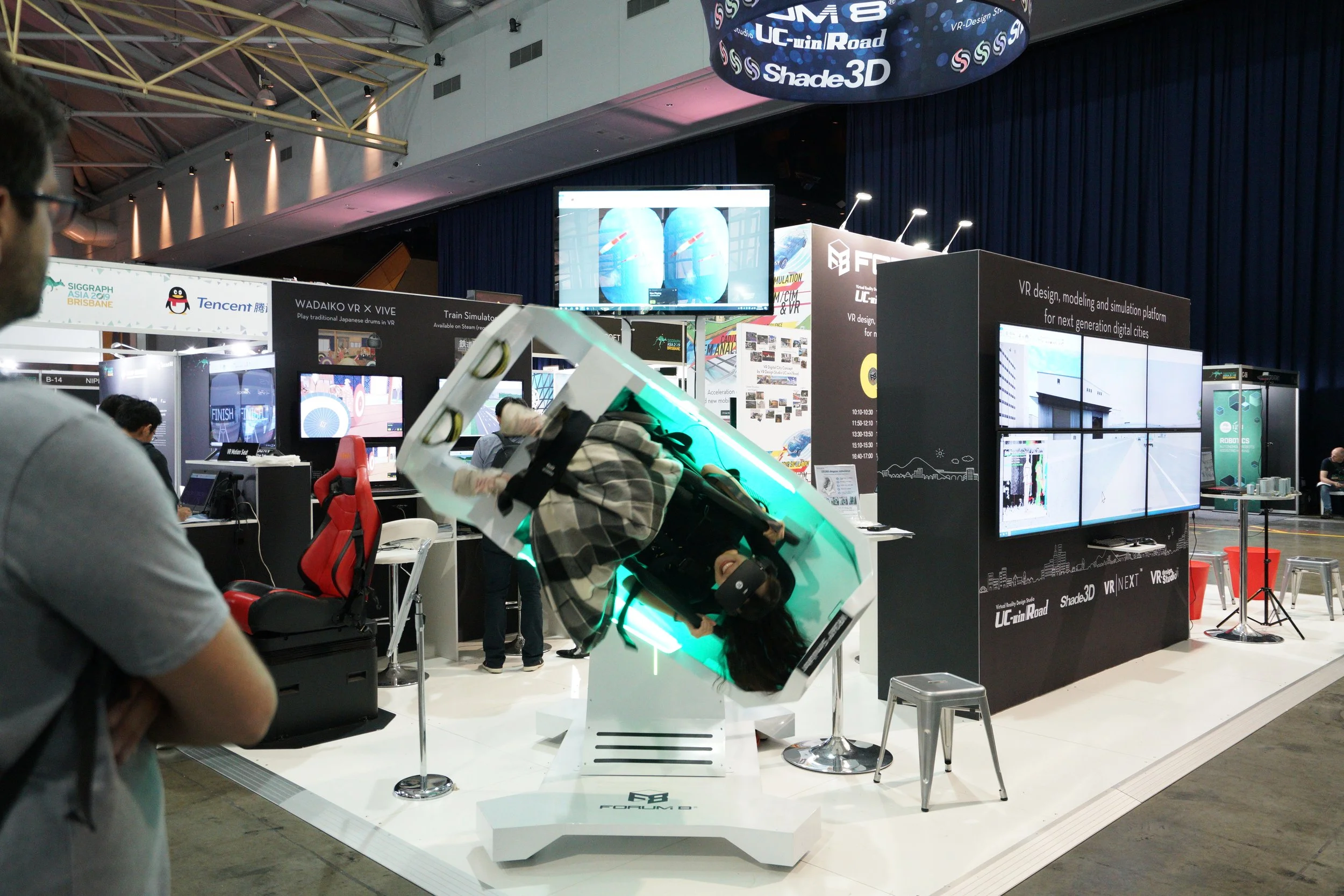
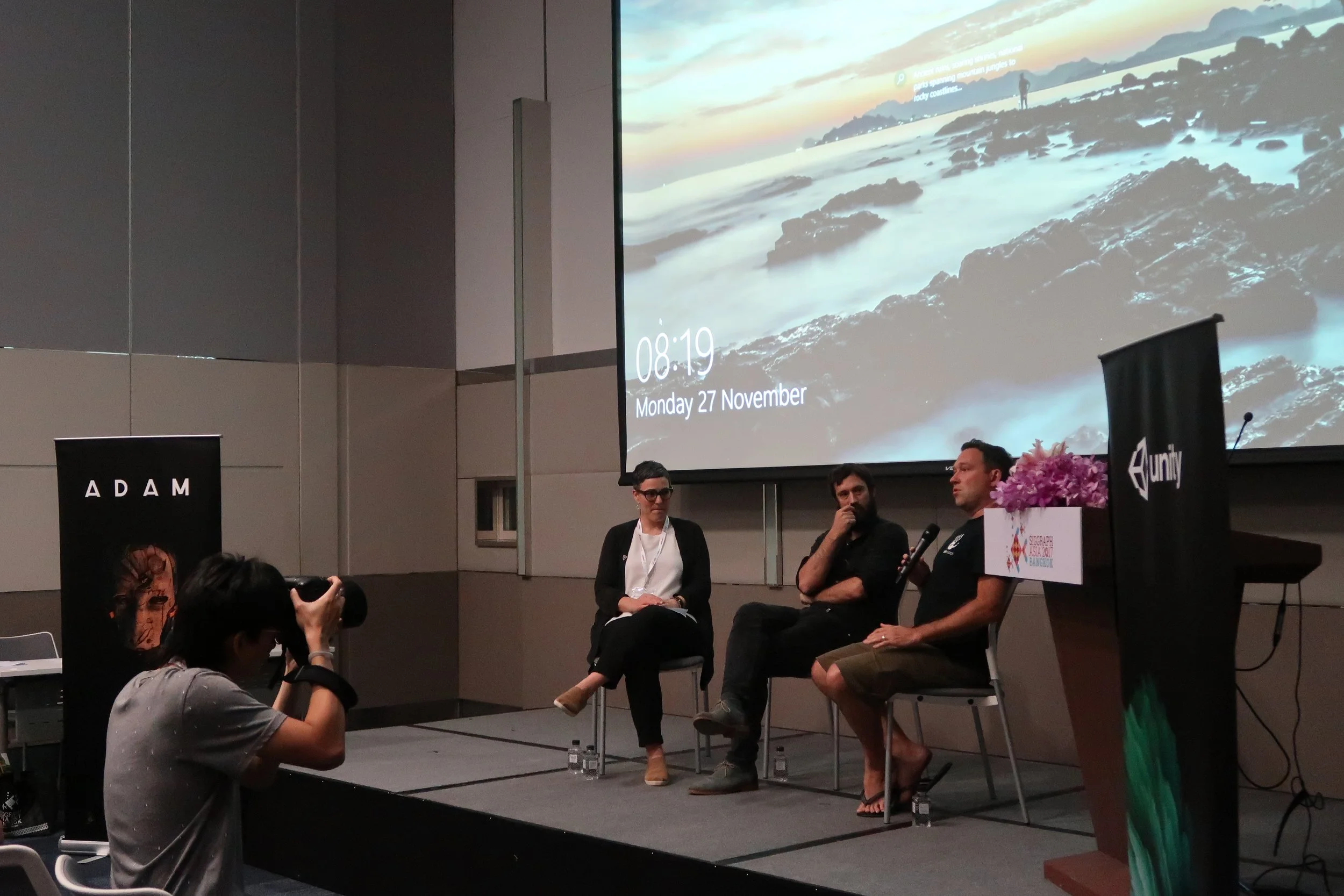
International communications infrastructure for Asia Pacific's premier computer graphics convention, operating on behalf of Koelnmesse across five editions in Thailand, South Korea, Hong Kong, and Australia.
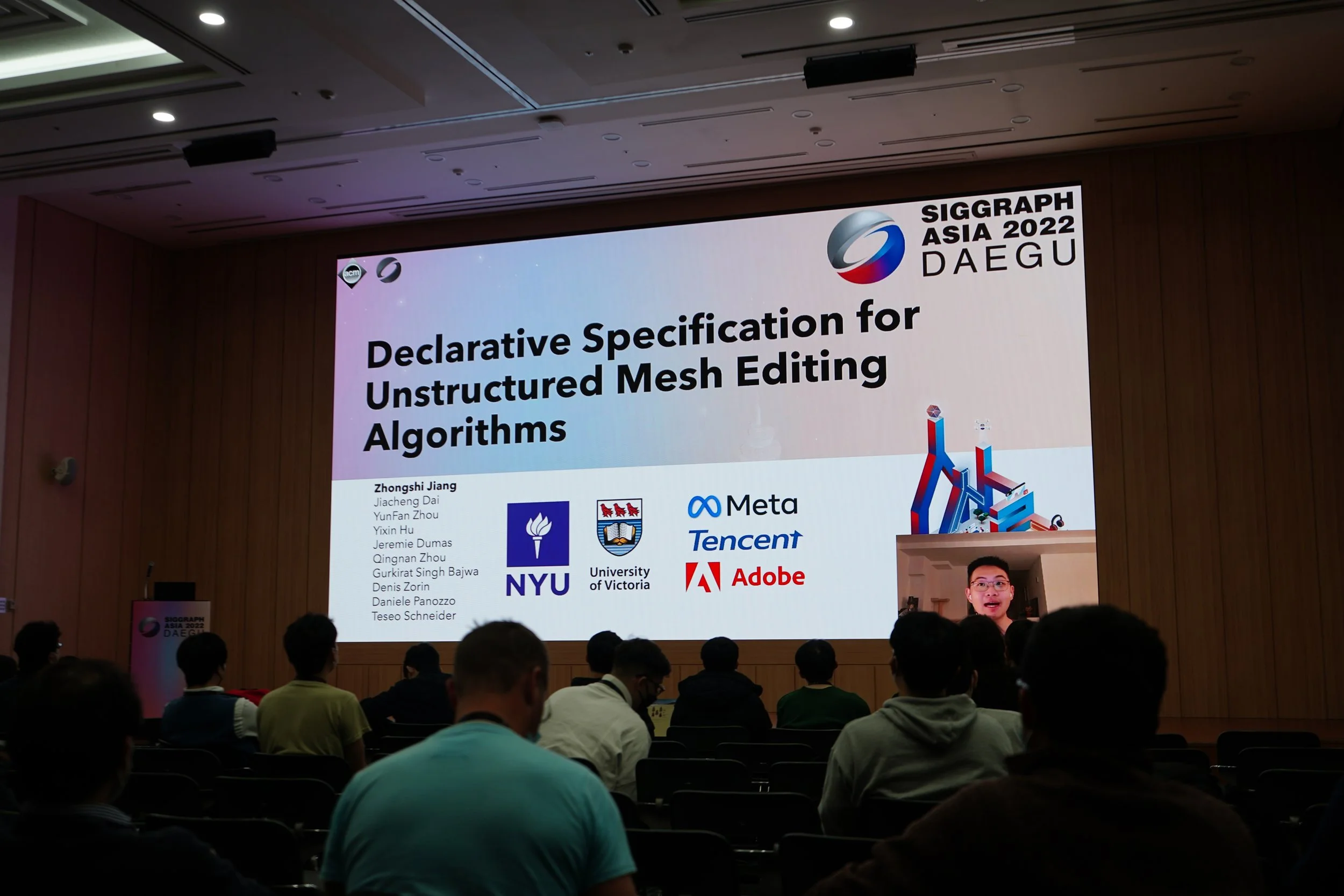
SIGGRAPH Asia's programme content spans peer-reviewed research in real-time rendering, collaborative spatial computing, and advanced simulation — technically dense material with significant commercial implications that required translation for business editors unfamiliar with the underlying computer science.
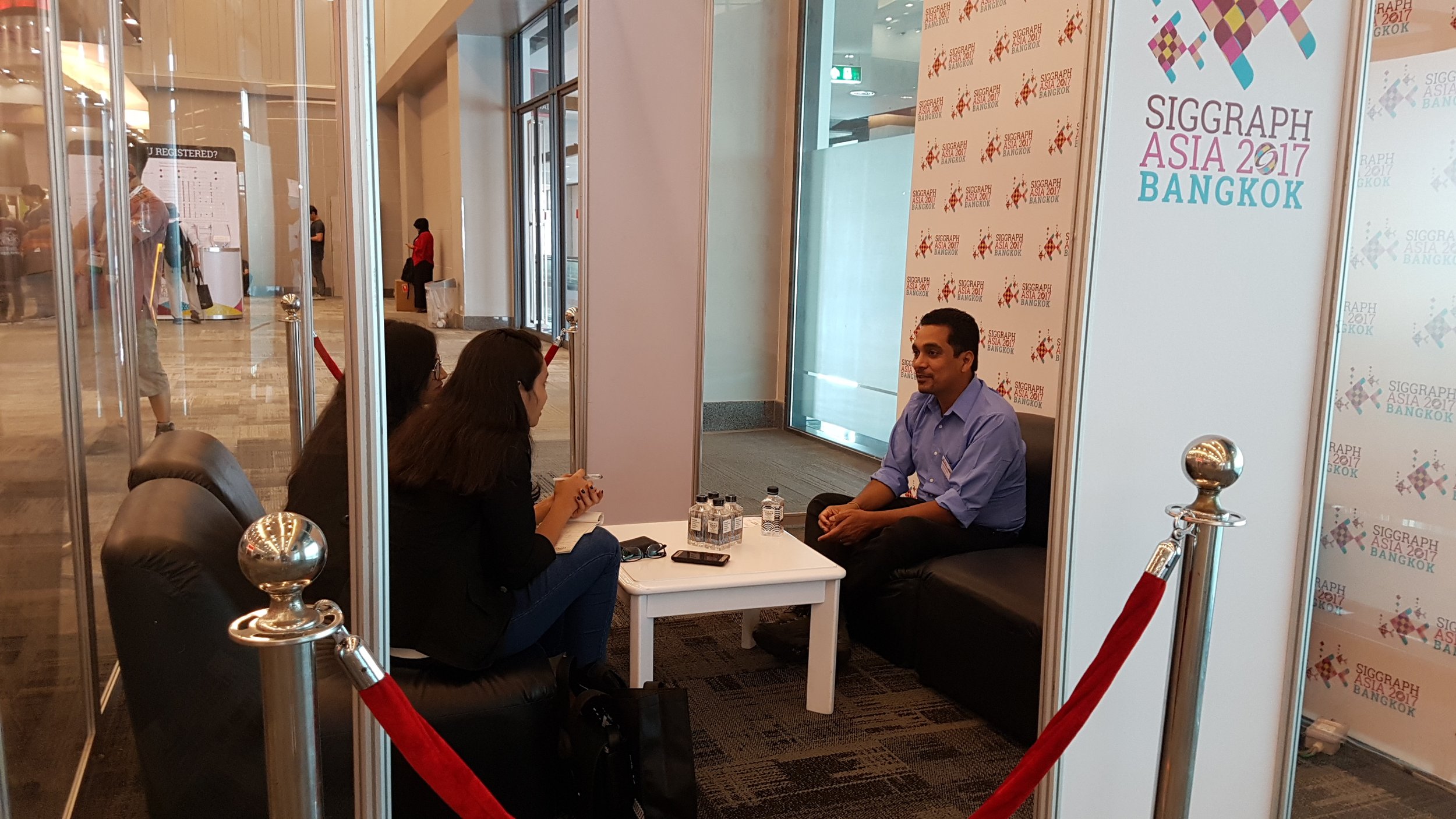
Pinpoint PR managed the full media relations operation across every edition: media accreditation, journalist briefings, on-site interview facilitation with international speakers including Oscar-winning VFX practitioners, and post-event coverage across business and technology titles. For each market — Bangkok, Seoul, Hong Kong, Sydney, Brisbane — the communications programme was adapted to the local media environment while maintaining consistent international positioning.
Year-on-year expansion in global tier-1 business and technology coverage, establishing SIGGRAPH Asia as the definitive platform for CGI, special effects, and commercial spatial engineering in the Asia-Pacific region. For the Australian editions, the second programme attracted double the number of attendees, in part due to a concerted stakeholder engagement programme we ran to attract and educate tertiary lecturers in the field.
Specialisms: Frontier Computing & Interactive Techniques; AR, VR, MR, XR, CGI, FX, Animation
-
![NHK Interview with Nobel Laureate Prof Takaki Kajita at GYSS]()
Global Young Scientists Summit — Frontier Science & Sovereign Communications
Pinpoint PR also continuously ran event communications for Singapore's annual convening of Nobel Laureates, Turing Award winners, and Fields Medalists, developed for the National Research Foundation for seven years.
GYSS presented a specific communications challenge: translating multi-disciplinary frontier research — spanning quantum computing, autonomous systems, and climate simulation — into media features that connected laboratory work to macroeconomic relevance and commercial investment theses.
We engaged Science journalists and designed a communications framework that gave international business and science journalists structured access to speakers, with tailored editorial angles for each media segment: mainstream business press received investment-relevance narratives, science media received peer-level technical framing, and sovereign policy networks received geopolitical and capability-building angles. The programme managed complex stakeholder protocols and strict academic disclosure parameters across multiple editions.
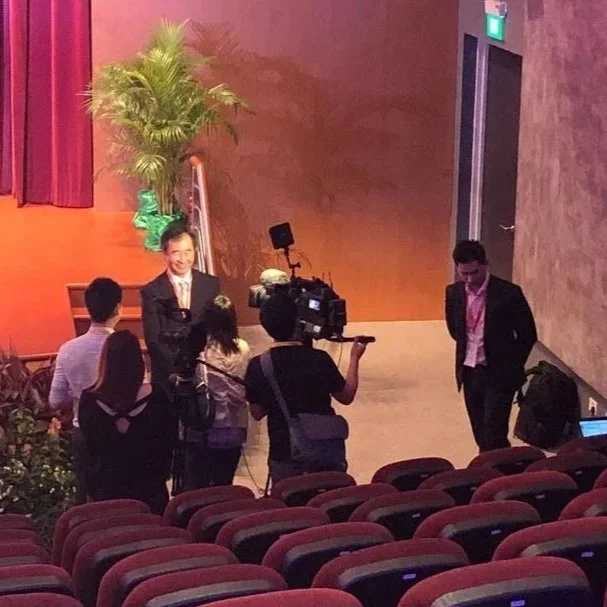
The outcome was that we positioned Singapore as the primary global hub for venture-scale frontier science. WE secured broadpage and broadcast coverage on Tier-1 national (CNA, The Straits Times, MoneyFM, CNA938 Live) and International coverage (Bloomberg Radio, CNBC Asia, BBC World, NNA, NHK, Nikkei).
Our social media programme included gamifying the event on Instagram and Facebook to engage attendees and their followers; we produced science based gfs to use on social media; we created video and visual assets; and ran engagement programmes with local Universities.
Essentially, we used creativity every year to differentiate each edition of the event, overlayed on a replicable corporate communications playbook for converting frontier research metrics into institutional and sovereign credibility.


Frequently Asked Questions
-
Singapore is the entry point for enterprise immersive tech — it has the highest concentration of regional enterprise buyers, the most internationally connected technology media, and a government innovation ecosystem (Infocomm Media Development Authority, Smart Nation initiatives) that provides immediate narrative hooks for spatial and AR applications. The primary media targets differ by your buyer: for enterprise and industrial AR, the key outlets are The Business Times, The Edge, and regional supply chain and logistics trade titles. For location-based entertainment and spatial experiences, we target travel trade, hospitality, and commercial real estate media. For frontier computing, SIGGRAPH-adjacent science and technology media globally. We map the media landscape to your specific buyer before we pitch a single journalist.
-
This is the central challenge for every immersive tech vendor entering the region, and it is what we do. The approach is to eliminate the consumer frame entirely from the first communication — no mention of gaming, no reference to headsets as gadgets, no speculative future language. We build the narrative around operational outcomes that COOs and VPs of Supply Chain already care about: picker accuracy, line downtime, worker safety, training cycle reduction. The TeamViewer Frontline programme is the clearest example — we repositioned industrial AR as Connected Worker infrastructure, not technology. Enterprise buyers in Singapore, Malaysia, and Indonesia respond to that framing in ways they do not respond to spatial computing as a concept.
-
Yes — and trade events are one of the highest-leverage entry points for immersive tech vendors in Southeast Asia. We managed the AStation Enterverse launch at ITB Asia 2025 and have run event communications across SIGGRAPH Asia in Thailand, South Korea, Hong Kong, and Australia. Our standard event programme includes pre-event media briefings to set context, on-site journalist facilitation and live demonstrations, and post-event coverage that extends the narrative beyond the conference floor. If you are making a product announcement or introducing a regional spokesperson at the event, we build the media programme around the announcement rather than the other way around.
-
Yes — this is the most common starting position for international immersive tech vendors engaging us. We act as your on-the-ground communications infrastructure: managing journalist relationships, briefing logistics, and spokesperson preparation from Singapore on your behalf. AStation engaged us before they had significant regional media presence; the ITB Asia launch established their market position. You do not need a physical office to build credible regional visibility — that is precisely what a retainer with Pinpoint PR provides.
-
We anchor the unfamiliar to the familiar. When spatial computing or digital twin technology has no reference point in a market, we connect it to infrastructure concepts the buyer already trusts — ERP integration, operational efficiency metrics, safety compliance frameworks. We also use proof-of-deployment case studies from adjacent markets as credibility bridges: if a comparable enterprise in Germany or the US has deployed your platform at scale, that case study becomes the lead narrative for Southeast Asian enterprise buyers who are risk-averse toward unproven technology. The goal is to make your platform feel like a logical next step rather than a leap of faith.
-
Global agencies manage home market brand consistency well. What they lack is direct working relationships with editors at The Business Times, The Straits Times, Tech in Asia, and the regional industrial trade titles — and the in-market knowledge to know which spatial computing story angle will land with a Singapore logistics buyer versus a Malaysian commercial property developer. The immersive tech media landscape in Southeast Asia is also significantly less developed than in North America or Europe, which means relationship-driven placement is more important here than in markets with established XR trade press. We work alongside global agencies regularly; the cleanest arrangement is your global agency for home markets and Pinpoint PR for Asia-Pacific, with a defined briefing handoff.