

Turning Complex Science into Market-Moving Narratives
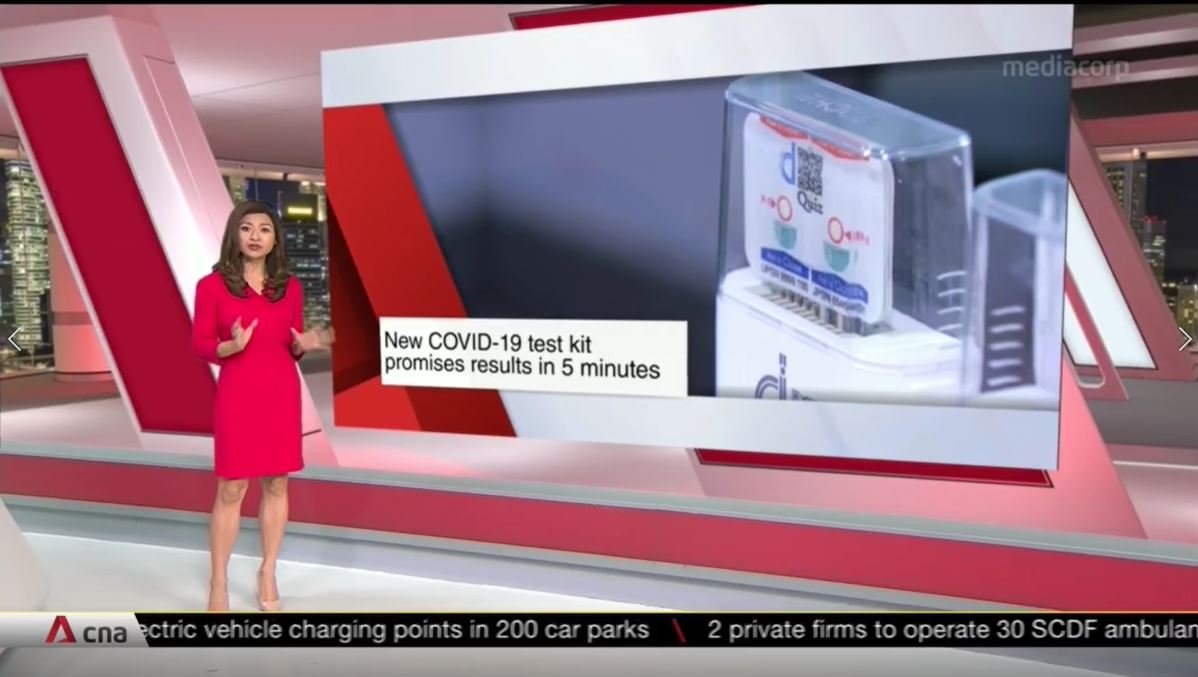
In November 2020, Pinpoint PR facilitated the launch of a single use PCR test kit for Covid-19, as shown on CNA.
PLAYBOOK: The Deep Tech Translation Framework
Deep technology and emerging science companies face a unique communication paradox: the very complexity that gives them a competitive advantage often builds a barrier to capital, media coverage, and public trust. Founders and inventors frequently suffer from the "curse of knowledge," speaking in dense, technical jargon that isolates generalist journalists and investors.
This playbook establishes a repeatable, strategic framework designed to strip away technical obscurity and replace it with a compelling, high-stakes narrative. Grounded in a real-world multi-million dollar exit, this methodology demonstrates how sophisticated PR can accelerate regulatory approvals, unlock global commercial demand, and drive corporate acquisition. The approach is representative of that which we take for B2B Technology PR.
Phase 1: The Forensic Extraction Protocol
Extracting a clear story from a highly technical environment requires moving beyond standard marketing intake forms. The narrative must be excavated through a rigorous, long-form journalistic approach.
Appointing a Subject-Matter Journalist
Rather than relying on generalist copywriters, appoint specialized science or technology journalists to lead the discovery phase. These professionals possess the baseline knowledge required to challenge technical assertions and dig into the underlying science without getting lost in it.
The Unstructured, Goal-Oriented Interview
The discovery process relies on exhaustive, multi-hour, unstructured yet goal-oriented interviews with the core inventors or scientific officers. The objective is to secure enough rich content to build two distinct narratives:
The Discovery (Science): What the technology is, why it works, the architectural breakthrough, and its macroeconomic utility.
The Pedigree (Human): Who invented it, their personal driving force, their professional background, and the human cost of the discovery process.
Phase 2: Building Analogy
To make dense science relatable to generalist reporters, investors, and public stakeholders, the narrative must leverage structural analogies. Analogies do not "dumb down" the science; instead, they provide a conceptual scaffolding that allows non-experts to visualize complex architectures.
Co-Developing Relatability
The PR strategist and the science journalist must actively nudge the spokesperson to develop and test analogies during the interview phase. These analogies are stress-tested against non-technical team members and external generalists to ensure they land accurately without distorting the underlying science.

Developing relatability through use of analogies.
A Nov 2020 report in The Straits Times on Cell-ID’s Quiz Biochip, a single-use PCR test kit.
Phase 3: The Narrative Splitting Strategy
A common error in deep tech PR is forcing scientific specifications and founder biographies into a single, over-dense press release. Sophisticated campaigns split the narrative into two distinct editorial streams, which then inform the broader communications architecture.
The Feature Story (The Innovation)
This stream focuses entirely on the macroeconomic problem, the technical breakthrough, validation metrics, and global utility. It answers the critical market question: Why does this innovation matter to the world right now?
The Biographical Story (The Human Drive)
This stream focuses on the founder’s personal journey. It highlights their resilience, sacrifices, and background. This narrative builds psychological trust, showcasing the human commitment behind the science—an element crucial for top-tier features and investor confidence.
Phase 4: Asset Architecture & Campaign Preparation
Deep tech narratives require visual proof. Before going to market, a comprehensive suite of multimedia assets must be developed over a meticulous preparation window (typically 4–6 weeks).
The Communications Toolkit: Translating the core long-form editorials into with layered Q&As, messaging pillars, and technical fact sheets tailored for different media tiers.
The Multimedia Press Kit: Producing high-resolution macro photography of the technology, video B-roll showcasing its operational use, and clean technical infographics.
The Launch Microsite: Establishing a clean, dedicated digital environment containing all media assets, validation studies, and contact pathways, ensuring seamless post-briefing exploration by journalists.
Phase 5: Tactical Launch & Execution
The execution of a deep tech media launch requires strict temporal discipline to maximize impact and control the narrative velocity. Here’s a schedule example of how we approached this project:
The 72-Hour Media Launch Window
Friday, 4:00 PM (The Selected Embargo): Send a highly targeted, hand-picked selection of top-tier journalists a strict embargo notice. This timing allows reporters the weekend to process the complex materials without the pressure of an immediate news cycle.
Monday, 12:00 PM (The Virtual Press Briefing): Host a structured, concise virtual briefing. In highly dynamic or constrained environments, authenticity beats over-production. A founder presenting transparently from a makeshift setup can enhance the raw, high-stakes nature of an urgent breakthrough.
Monday, 2:00 PM (The Wave Effect): Lift the embargo. Stories break simultaneously across digital channels, creating a concentrated wave of authority that commands industry attention.
Phase 6: Managing Gatekeepers & Media Dynamics
When launching complex innovations—particularly in medical, military, or deep infrastructure tech—the PR strategy must account for the divergent behaviors of state-influenced media versus independent networks.
Risk
Sometimes traditional, domestic mainstream outlets may seek commentary from state ministries or regulatory bodies before publishing. If the innovation challenges existing state-sponsored protocols or is pending regulatory approval, regulatory bodies may intervene to suppress or delay the story domestically to maintain institutional control.
Leveraging Independent & Commercial Networks
Conversely, independent, commercial, or international media networks operate on global news values and at commercial speed. By ensuring these outlets receive the narrative simultaneously, the story can bypass localized gatekeeping. Once international syndication occurs, it creates external validation that flows back into the domestic market.
Phase 7: Real-World Case Study & Commercial Outcomes
This framework was deployed for the launch of a novel biochip technology during a global health crisis. The technology was complex, and the company was navigating regulatory approval bottlenecks.
The Strategy in Action
Following a 4-hour forensic interview by a science journalist, the narrative was split into a technical feature and a dramatic biographical story about the inventor's personal sacrifices. The launch was executed via a Zoom briefing under strict embargo controls.
Impact
While domestic state-aligned print media delayed publication due to regulatory cross-checking, commercial broadcast networks ran the story immediately. The broadcast coverage triggered a rapid chain of global events:
Global Syndication: An international news wire picked up and translated the story, distributing it across Europe within 24 hours.
Immediate B2B Demand: A European regional hospital placed an immediate commercial order for 2,000 units within a single week.
Sovereign Interest & Regulatory Acceleration: JWT NASA’s technical teams discovered the story via international coverage and initiated contact to acquire the testing protocols to use on astronauts going to the International Space Station (ISS). That interest materially accelerated the technology’s regulatory approval pathways in the United States.
The Ultimate Corporate Exit: Within 12 months of the campaign, the massive global visibility and validated market demand culminated in a successful buyout by a major multinational electronics corporation, scaling manufacturing globally.
Illka Gobius is the Managing Director of Pinpoint PR Pte. Ltd., a boutique APAC communications agency headquartered in Singapore, with nearly three decades of regional experience. We specialise in B2B Technology PR, Events & Exhibitions PR, and Reputation & Stakeholder Management.
