

Writing Press Releases for AI
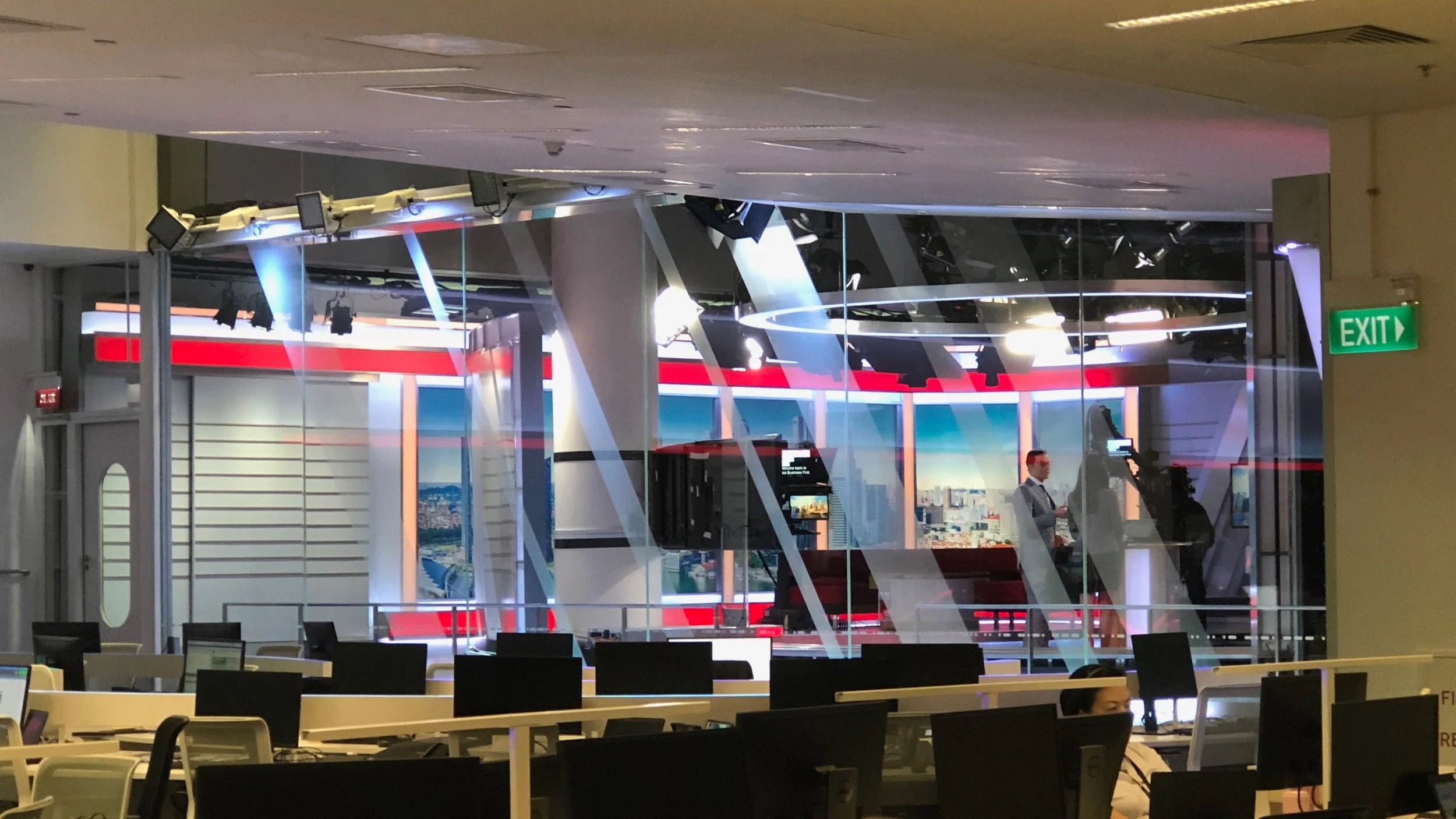
Mediacorp’s CNA Newsroom and Studio
For sixty years, the press release was for the journalist in the news room, the one deciding whether the story deserved a bigger stage. Every carefully placed quote, every fact, graph, statement of fact and boilerplate paragraph was built to earn that one person's attention.
While that audience hasn't gone away, on 3 June 2026, Cloudflare confirmed something every comms team now needs to build into their process. For the first time in the internet's history, automated requests overtook human ones, with bots and AI agents accounting for 57.5% of all web traffic to HTML content, against 42.5% from people. Cloudflare's CEO had forecast this crossover for 2027. It arrived eighteen months early!
Singapore sits at the centre of this shift — Cloudflare's country data puts its automated traffic share above three-quarters, among the highest in the world; a function of the region's role as Asia's cloud and data-centre hub.
The result is that your press releases now need the attention not just of the news room, but of machine readers. .
Your Readers Are Now Human and Machine
Your release now has two readers in the room. One has a byline. The other is deciding, in milliseconds, whether your announcement is clear enough, specific enough, and well-structured enough to be summarised, cited, or recommended the next time someone asks an AI system a question your story could answer.
This is the shift behind two terms now circulating in comms circles:
AEO (Answer Engine Optimisation) and
GEO (Generative Engine Optimisation).
Neither is a fad. Both describe a real and permanent change in how information gets discovered.
PR teams that treat them as an afterthought are going to find their carefully crafted announcements invisible in the exact places their stakeholders are now looking.
What AI Systems Want From a Press Release
Generative engines don't reward the same things journalists do. A journalist can read between the lines, chase a spokesperson for colour, and forgive a vague sentence if the story underneath is strong. An AI system can't. It extracts what's explicitly there.
That means a release built for AEO and GEO needs to do a few things a traditionally "well-written" release often doesn't.
It comes down to four things:
- Facts. Who, what, when, where, and why, stated in clear, self-contained sentences — answerable without three paragraphs of context first. Vague claims like "significant growth" or "many customers" are unquotable; a specific figure is.
- Sources. Claims attributed to identifiable, authoritative references rather than left to float unsupported. Generative engines weigh traceability — a figure with a named source behind it carries more than the same figure alone.
- Structure. Clear headings, a strong opening paragraph, and logical sections that make it easier for both a search crawler and a generative model to locate the core of the story, and to answer the actual question someone would type into an AI assistant.
- Authority. Organisations, spokespeople, and products unambiguous on first mention — full names, roles, context — reinforced consistently across every release, so AI systems can attribute information with confidence rather than guessing at who's speaking.
Why This Matters More, Not Less
There's a temptation to treat this as a Silicon Valley problem—something for consumer tech brands with big organic search budgets. It isn't. Today, 75% of Singaporeans bypass search tools to use AI as a source for answers.
That means your B2B buyers, journalists, analysts, and investors across Singapore, Malaysia, Indonesia, and the wider region are already using AI tools as a first research step before they ever reach a company website or a media outlet.
A cybersecurity vendor announcing a partnership, a fintech launching in a new market, an event organisation confirming a keynote speaker — all of these are exactly the kind of announcements now being summarised, compared, and surfaced by generative engines on someone's behalf. Not reports from journalists.
If your release isn't built to be understood by those systems, you're not losing a nice-to-have channel. You're losing the moment where an increasing share of your audience first encounters your story.
The Practical Shift
None of this means abandoning craft. A press release optimised for AEO and GEO still needs a strong narrative, sharp quotes, and precise British English — the fundamentals of good communications haven't changed.
What's changed is that "well-written" now has to mean well-structured, specific, and self-contained, not just elegant.
In practice, that means running every release through more than one lens before it goes out: language quality, a standalone executive summary that could survive being lifted out of context, a set of anticipated questions and answers, and a specific pass for how an AI system would parse, quote, and attribute the story.
The press release isn't dying. But the definition of who — and what — reads it first has already changed. The organisations that adjust their process now will be the ones still getting found, cited, and recommended long after this becomes standard practice rather than a point of difference.
If you want a shortcut to opitmising your press release, download Pinpoint PR’s Skills.MD file. It will tell your AI how to optimise your Press Release for SEO, AEO, and GEO.
---
Pinpoint PR helps establish the communications foundation that defines what organisations stand for in the Asia Pacific, then amplifies it, consistently and strategically, to every stakeholder that matters — including the ones asking an AI assistant instead of a search engine.
